





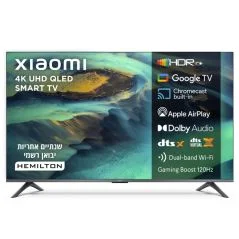


#2 Best seller


299 ₪349 ₪
Or 24 Installments of ₪ 12.46 without fees
In Stock.Home delivery : 1 - 4 Business Days
Instant - Self-pickup From central Israel, according to operating hours



A selection of TVs from the best brands - for all of Israel.

173 products




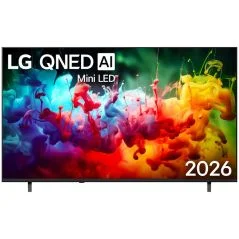
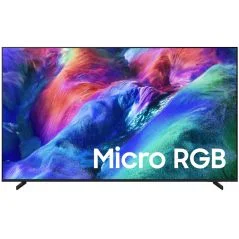
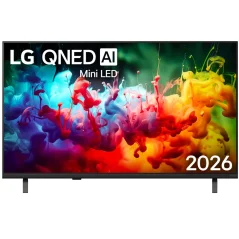
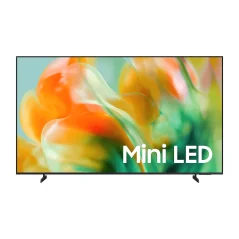


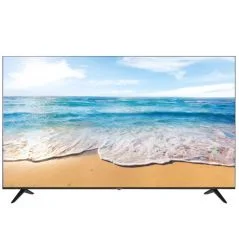
The size of your TV should match the size of your space. TVs are measured diagonally, from 32" to over 75". For example, a 32" TV is approximately 81 cm diagonal, while a 75" model reaches approximately 191 cm. When choosing, keep in mind that the perception of space often differs between the store and at home, so a screen will generally appear larger at home.
Here are the approximate equivalents of television sizes in inches converted to centimeters:
These conversions are rounded for ease of common use.
LCD screens are more common and offer good image quality at a lower cost. OLED displays, although more expensive, offer deeper blacks and better contrast thanks to individual pixel illumination technology.
LCD and LED refer to the same liquid crystal display technology, but LED uses light-emitting diodes for backlighting, providing thinner, more energy-efficient displays compared to older tube-backlit LCDs.
For screen sizes above 40 inches, opt for 4K (UHD) resolution for better image quality, even with Full HD content. 8K, although available, does not currently provide a significant improvement in image quality.
HDR (High Dynamic Range) improves the brightness and colors of images by extending the luminance range. Ultra HD Premium is a certification for high-end televisions, guaranteeing a minimum UHD resolution and compatibility with HDR.
A Smart TV is a television connected to the Internet, which allows access to a variety of online content. It can be connected to the Internet via an Ethernet cable or a Wi-Fi connection. Manufacturers generally offer an integrated service portal allowing users to stream films and series, browse the web, and access applications and games directly from their TV.
Idan Plus is a broadcasting and communication project supported by the Israeli government, designed to provide a basic viewing package to all Israeli citizens, free of charge. A number of free television and radio channels are active in Israel, which do not require subscription fees, and the Idan Plus project is designed to bring together all these channels and make them accessible for free to the entire population.
With today's 4K TVs, you can sit closer to the screen while still enjoying a sharp, high-quality picture.
Here are some general recommendations based on viewing distance:
- Up to 2 meters: 43–50-inch TV.
- 2–3 meters: 55–65-inch TV.
- Over 3 meters: 75-inch TV or larger.
Keep in mind that these are general guidelines, and your personal viewing preferences should also be considered.
Can't decide between two sizes? Zabilo's team of experts will be happy to help you choose the perfect TV for your living room and the viewing experience you're looking for.
Popular apps include Netflix, YouTube, Disney+, and Prime Video, as well as apps from Israeli TV providers such as yes+, HOT, Partner TV, Cellcom TV, and Kan 11.
Some apps come pre-installed on the TV, while others can be downloaded from the app store.
It's important to know that app availability varies depending on the TV brand, operating system, and model.
Is there a particular app that's important to you? Zabilo's team of experts will be happy to help you choose a TV that supports your favorite apps and streaming services.
If you have a subscription to a TV provider such as yes or HOT, you can use its app directly on your Smart TV, provided that your TV model supports the app and your subscription allows streaming through it.
Prefer watching through a specific TV provider? Zabilo's team of experts will be happy to help you choose a TV that supports your preferred streaming services.
For particularly large or heavy TVs, additional reinforcement of the framework behind the drywall may be required to ensure a stable and secure installation.
We recommend using a professional installer who can assess the wall's strength, select the appropriate fixings, and carry out the installation safely.
Not sure which wall mount is suitable for your TV? Zabilo's team of experts will be happy to help you at 03-6044011.
What's the difference between 60Hz and 120Hz?
- 60Hz: Suitable for most everyday uses, including watching movies, TV series, and television programs.
- 120Hz: Especially suitable for gaming enthusiasts using consoles such as PlayStation 5 and Xbox, as well as for watching sports and fast-moving content. The higher refresh rate provides smoother motion when viewing compatible content.
Which should you choose?
If you mainly watch movies and TV series, a 60Hz TV may be perfectly suitable for your needs. If you frequently play video games or want a smoother viewing experience during fast-moving scenes, it's worth considering a 120Hz TV.
Today's TVs are incredibly slim, which means that the built-in speakers on some models may be limited in terms of sound quality and volume.
What should you consider?
- Living room size and viewing distance: In larger spaces, a soundbar can significantly improve the audio experience.
- Speaker power: A 20W output is considered relatively basic, while 40W offers higher power output.
- Audio system quality: Some TVs feature advanced speakers positioned in different areas of the screen, providing an enhanced sound experience. That's why it's important to consider the overall audio system quality, not just the power output.
It's important to remember that a soundbar is not essential. The right choice depends on your needs and viewing habits.
Want to upgrade your viewing experience? Zabilo's team of experts will be happy to help you choose a soundbar that suits your TV, living room, and budget.
HDR (High Dynamic Range) is a technology that allows TVs to display a wider range of brightness levels, colors, and contrast. This makes it possible to see more details in both dark and very bright areas of the same image.
For example, in a dark scene, you can notice details that would normally be lost in the shadows while still enjoying bright areas without losing their details.
Important to know: The level of improvement depends on the quality of the TV screen and the content you're watching. To fully enjoy the benefits of HDR, it's recommended to watch content that supports this technology.
This technology delivers a richer, more realistic picture, with clear details in both dark and bright areas.
Popular streaming services such as Netflix and Disney+ offer content that supports Dolby Vision, making it a significant advantage for movie and TV series enthusiasts looking for an exceptional viewing experience.
Is it essential? Not necessarily. Other high-quality HDR standards are also available, and picture quality largely depends on the capabilities of the TV screen itself. Dolby Vision is a valuable feature worth considering, but it shouldn't necessarily be the main factor when choosing a TV.
For example, in a scene where a helicopter flies over the characters, you can feel as though the sound is moving above your head. This creates a richer, more immersive audio experience that resembles watching a movie in a cinema.
How can you enjoy this technology? To get the most out of Dolby Atmos, it's recommended to watch content that supports the format and use a compatible audio system. Adding a Dolby Atmos-compatible soundbar can significantly enhance your audio experience and bring a more cinematic atmosphere into your home.
When activated, the TV disables certain picture processing features, such as motion smoothing and artificial sharpening, while preserving the original colors, motion characteristics, and aspect ratio of the movie.
This allows you to enjoy a more natural and authentic picture, without automatic adjustments that alter the cinematic look.
Filmmaker Mode is especially suitable for movie and TV series enthusiasts who prefer to watch content exactly as its creators intended.
- HDR10: A basic and widely used HDR standard that applies fixed picture settings throughout a movie or TV show.
- HDR10+ and Dolby Vision: More advanced standards that dynamically adjust brightness and contrast for each scene, and sometimes even for each individual frame. This helps preserve more details in both bright and dark areas, delivering a more accurate and realistic picture.
Dolby Vision is commonly supported by many LG and Sony TV models, while HDR10+ is widely used in Samsung TVs. Support varies depending on the model.
Important to know: Even a TV with standard HDR10 can deliver excellent picture quality. The final result depends on the quality of the screen itself and the content you're watching, not just the HDR standard.


Choose how you'd like to be contacted